
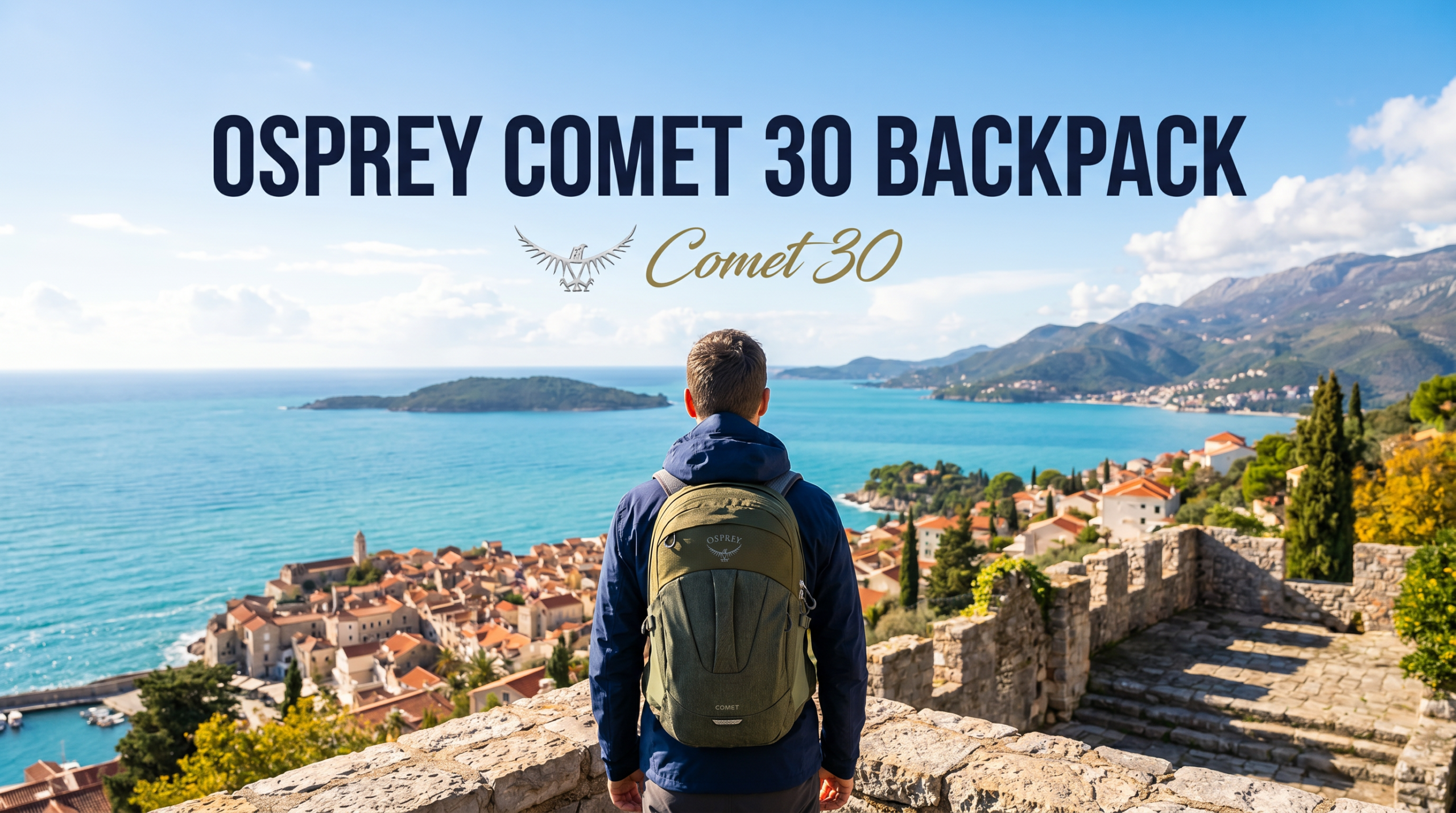
If “one bag for everything” is what you’re after:
Table of Contents
The Osprey Comet 30 doesn’t try to be everything.
It is not a giant trekking pack. It is not a minimalist ultralight thru-hiking pack.
It is not a suitcase-style travel backpack either.
It is a practical, comfortable, everyday-ready 30-liter backpack that sits in the sweet spot between campus, commuting, light travel, and casual outdoor use — and for a lot of people juggling all four, that’s exactly the point.
For the person who wants one bag that can handle a laptop, layers, chargers, snacks, water bottles, a weekend’s worth of essentials, and the occasional day hike, the Comet 30 makes a lot of sense.
It gives you Osprey comfort and build quality without forcing you into a technical hiking pack that feels awkward in a coffee shop, classroom, airport, or office.
But it is important to set expectations.
If your main goal is multi-day backpacking, heavy load hauling, or hydration-first trail performance, there are better Osprey alternatives.
If your main goal is a durable daily backpack that can travel, commute, organize gear, and still feel comfortable on longer days, the Comet 30 deserves a close look.
Why the Osprey Comet 30 Stands Out in a Crowded Market
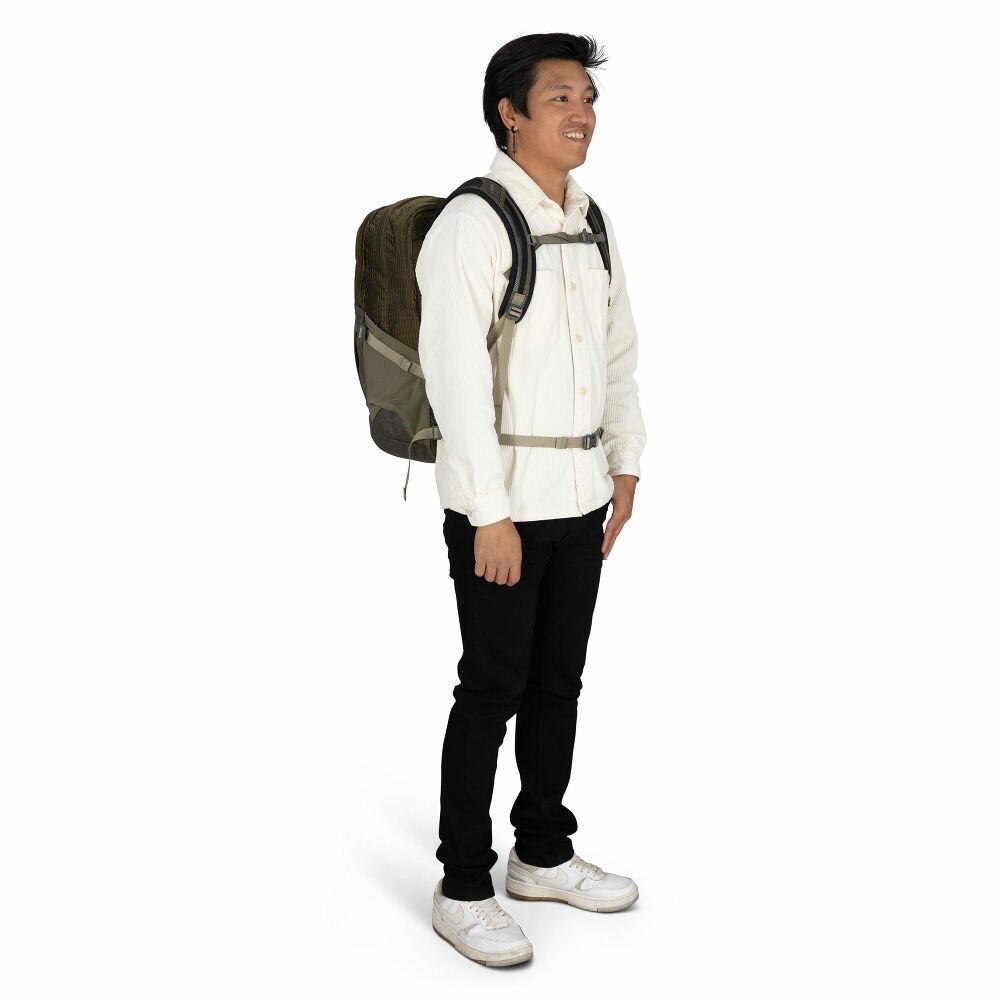
Most backpacks try to be either a school bag, a commuter bag, a hiking daypack, or a travel backpack.
The Comet 30 blends those categories better than many bags because it focuses on the things people actually use every day: organization, laptop protection, water bottle storage, comfortable carry, and enough space for changing plans.
The 30-liter capacity is the key.
Smaller daily bags can feel clean and compact, but they often run out of room once you add a laptop, jacket, lunch, headphones, chargers, and a water bottle.
Larger travel backpacks can hold more, but they can feel bulky for work, school, or casual daily use.
Thirty liters gives you a useful middle ground — proof that bigger isn’t automatically better, just different, depending on what your day actually looks like.
Osprey lists the Comet 30 at 30 liters, 1.927 pounds, and 18.9 x 12.2 x 11.42 inches, with recycled bluesign-approved nylon fabrics and PFAS-free DWR treatment.
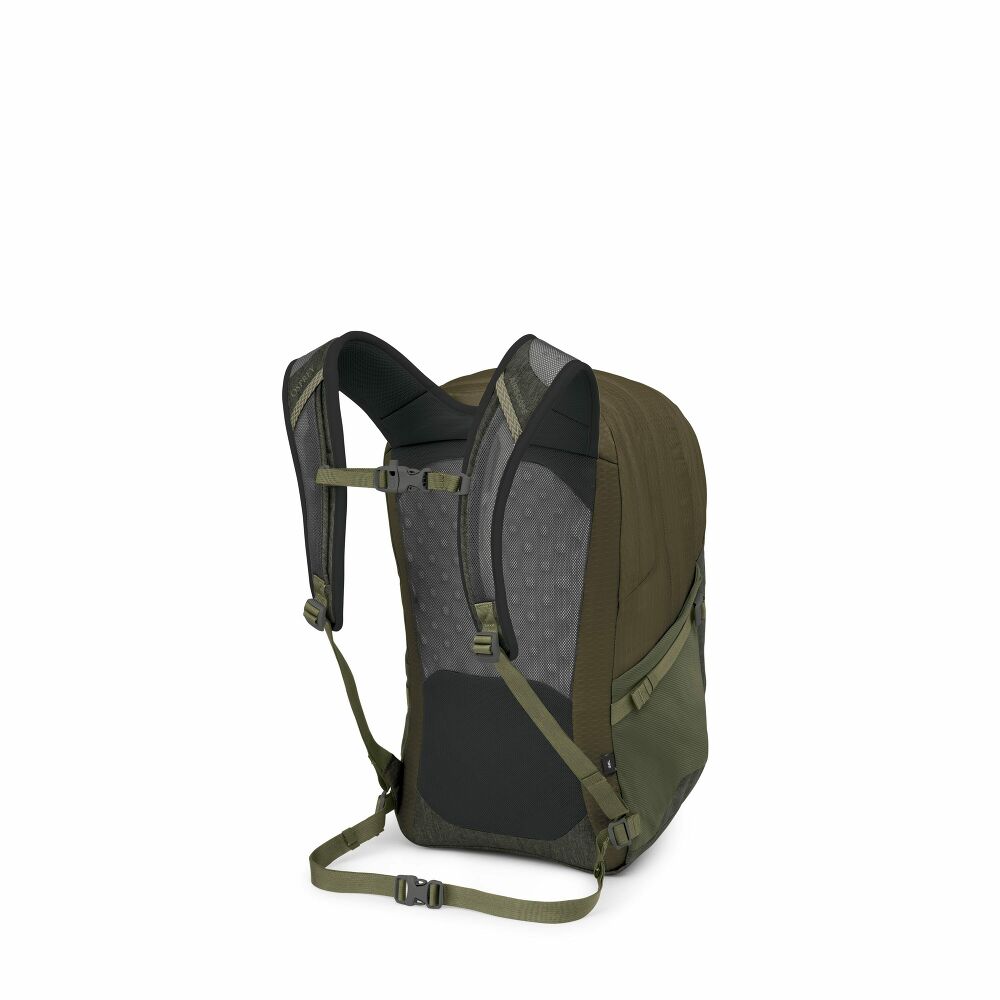
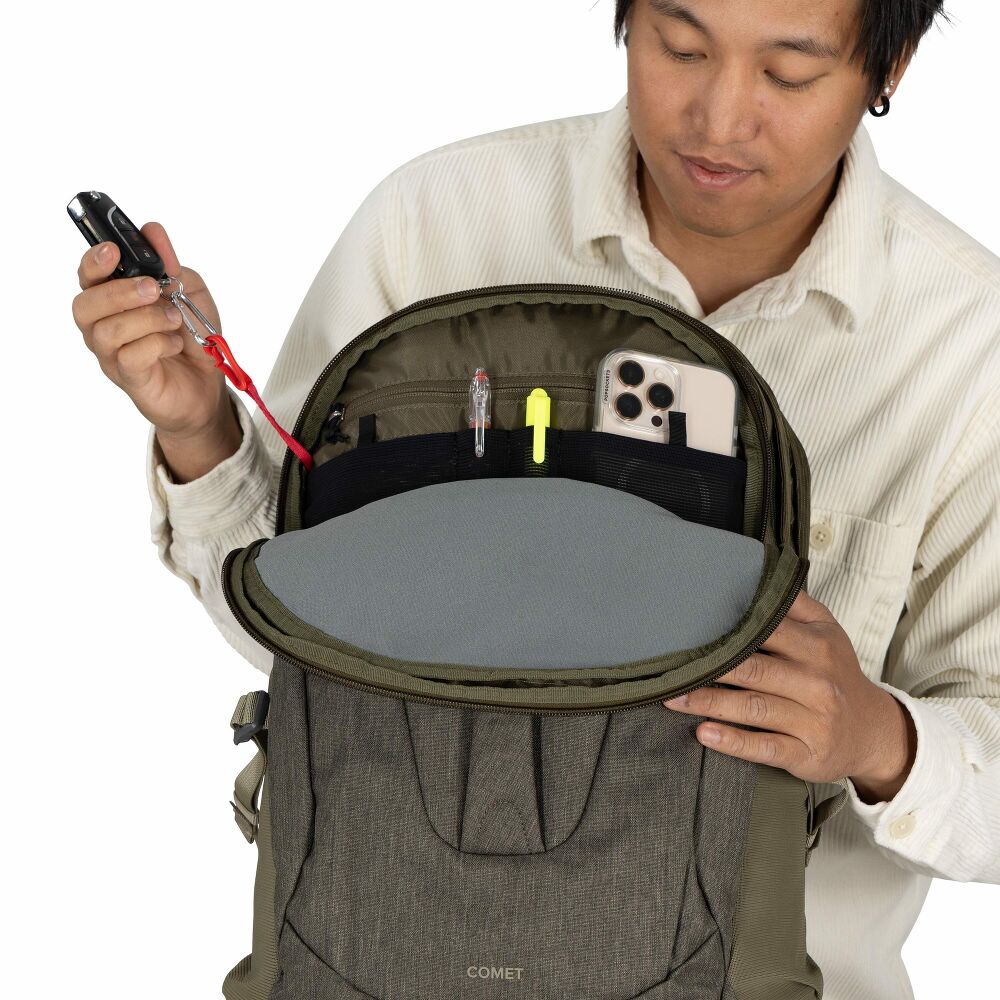
It also includes a separate zip laptop compartment, dual stretch mesh water bottle pockets, internal organization, a scratch-resistant pocket, AirScape backpanel, BioStretch harness, and removable web belt.
That combination makes it especially appealing for people who move between environments. Think airport in the morning, office in the afternoon, gym after work, and a quick trail or park walk on the weekend.
Best Use Cases
The Comet 30 works best for:
- Students who want a long-lasting campus backpack
- Commuters who carry tech, lunch, and daily gear
- Travelers who want a personal-item-style backpack for lighter trips
- Outdoor enthusiasts who need a casual daypack
- Digital workers who want a better organization than a basic hiking bag
- Anyone who wants one bag for work, errands, and short adventures
It is less ideal for heavy overnight hiking, technical terrain, winter gear loads, or anyone who needs a true framed pack with a substantial hipbelt.
One bag for class, the commute, and weekend trips —
Key Features and Specifications
Capacity: 30 Liters
The 30-liter size is the biggest reason this backpack is so versatile.
It gives you enough space for daily carry plus extras, without crossing into “big travel pack” territory.
For work or school, that means room for a laptop, notebooks, folders, a sweatshirt, headphones, snacks, and chargers.
For travel, it can hold packing cubes, a light jacket, toiletries, tech gear, and in-flight essentials.
For day hiking, it can carry layers, water, lunch, first aid, and small accessories.
The tradeoff is that 30 liters can feel large if you only carry a laptop and keys. But if your days tend to expand unexpectedly, the extra space is a benefit.
Price: $140
The Comet 30 carries a $140 MSRP — well below premium clamshell travel packs like the Peak Design Travel Backpack 45L (around $300), but priced above entry-level, no-name daypacks.
That mid-tier pricing matters: cheap bags aren’t bargains once a strap rips or a zipper jams six months in, and $140 buys Osprey’s lifetime repair guarantee along with the construction outlined below.
That guarantee isn’t just marketing copy — an outdoor education nonprofit that outfits multi-day wilderness expeditions has written about relying on it for years across their program backpacks, including stories of decades-old packs coming back from repair good as new.
It’s the same brand-wide guarantee that backs the Comet.
It’s not the cheapest 30-liter bag on the market. It’s priced to be the one you don’t have to replace.
Weight and Dimensions
At just under 2 pounds, the Comet 30 is light enough for daily use while still feeling more structured than a cheap, floppy backpack.
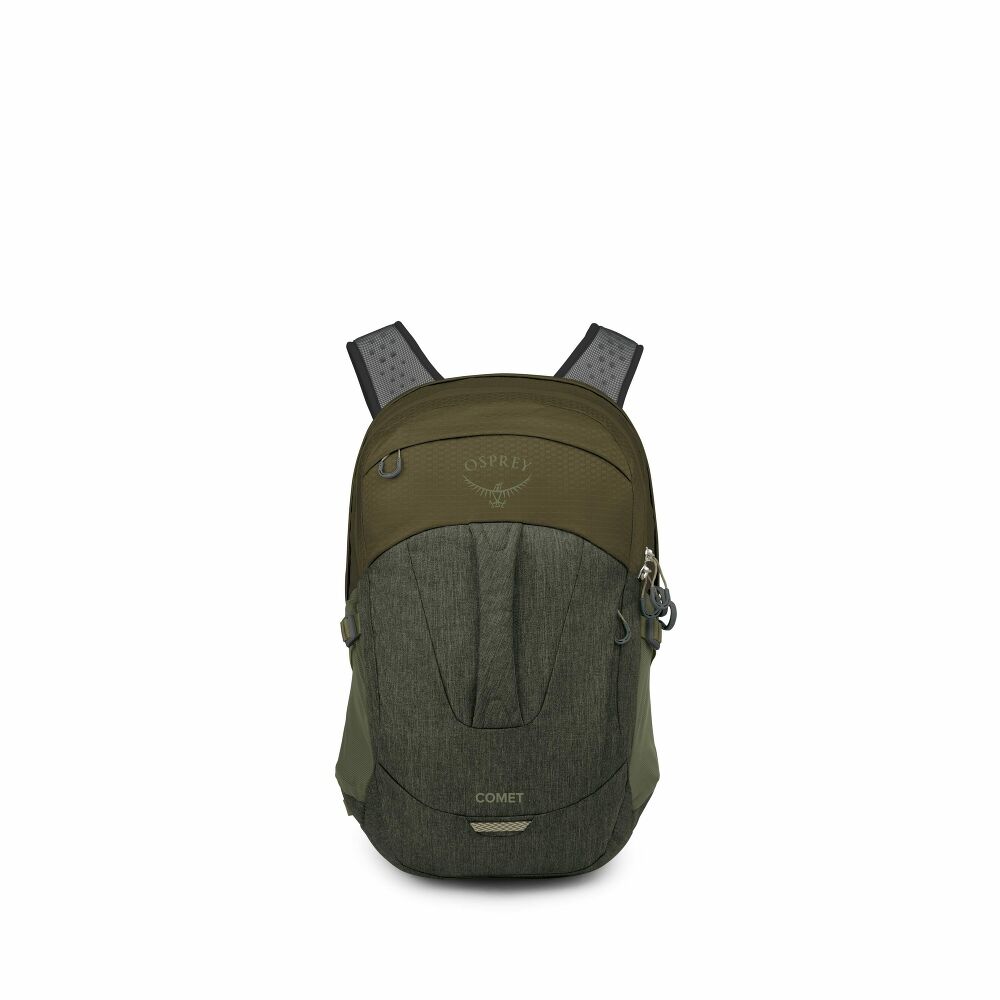
Osprey’s listed dimensions are 18.9 inches high, 12.2 inches wide, and 11.42 inches deep.
For travel, those dimensions matter.
Personal item and carry-on size limits vary widely by airline, so a soft backpack like this one may fit in some situations but not others, depending on how full it’s packed.
Always double-check your specific carrier before flying.
Materials and Durability
The Comet 30 uses recycled nylon fabrics with PFAS-free DWR treatment.
Osprey lists the main fabric as Bluesign-approved 210D recycled honeycomb contrast nylon, with 420D recycled nylon lining and bottom fabric.
That is a strong setup for daily abrasion: sliding under desks, sitting on airport floors, leaning against car seats, and getting tossed into the back of a vehicle.
It is not the same as a heavy expedition pack built to scrape against rock for weeks, but for everyday and travel abuse, it should be more than capable.
Laptop and Organization
This is where the Comet 30 shines.
The separate zip laptop compartment is one of the most useful features for students, professionals, and travelers.
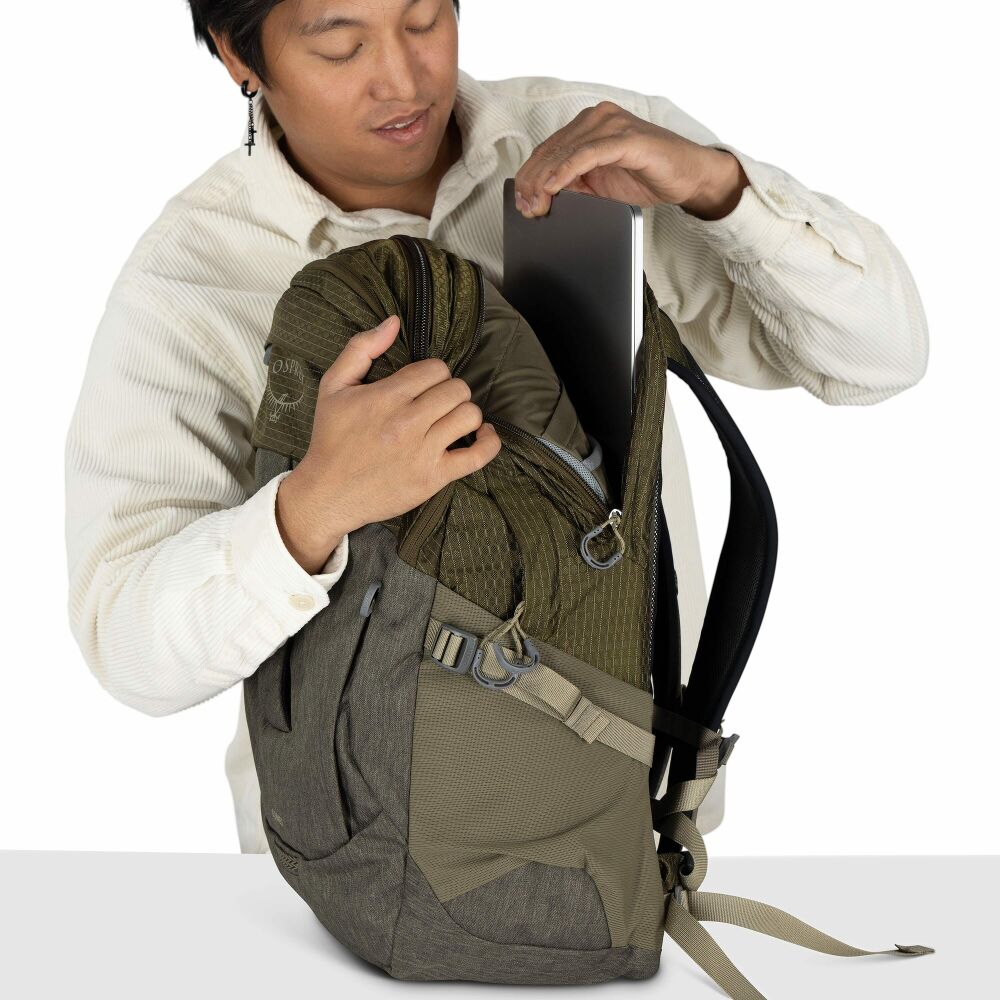
Osprey describes it as fitting up to a 16-inch laptop, which is a big advantage if you use a larger work or creator laptop.
The internal organization pocket helps keep smaller gear from turning into a loose pile.
Chargers, pens, earbuds, keys, notebooks, and travel documents all need a home — and if “I always overpack” sounds familiar, this is the feature built specifically for that habit.
It gives loose gear somewhere to live instead of letting it take over the main compartment.
Water Bottle Pockets
Dual stretch mesh bottle pockets are included.
That sounds simple, but it matters.
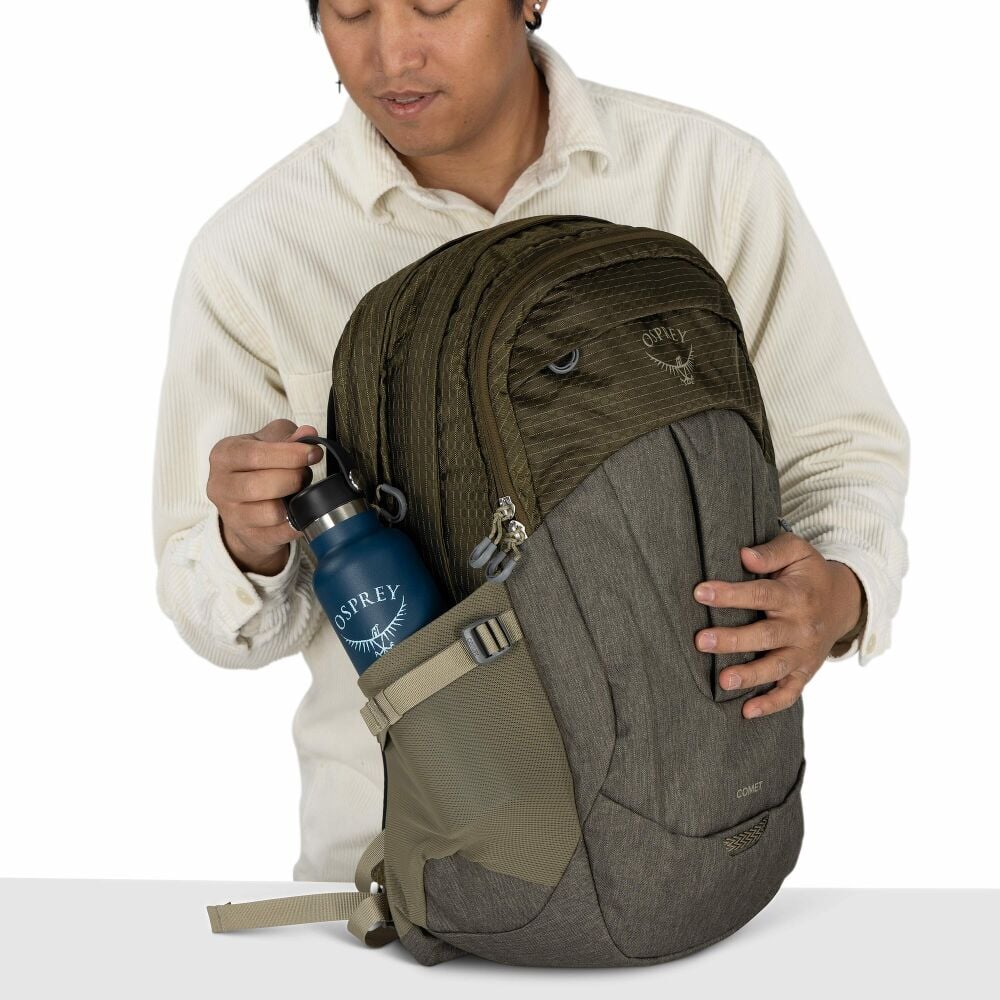
A good everyday backpack should not force you to put a water bottle inside next to your laptop.
For travel days, one pocket can hold a bottle while the other holds an umbrella, packable jacket, or small tripod.
For campus or commuting, it makes hydration easy without digging through the main compartment.
Backpanel and Harness
If “my backpack hurts my shoulders” is a familiar complaint, this is the section that’s supposed to fix it.
The Comet 30 uses Osprey’s AirScape ridge foam backpanel with an Atilon framesheet, plus a BioStretch harness with mesh-covered die-cut foam.
In plain English, that means it is designed to feel better than a basic school backpack when the load gets heavier.
The back panel gives the bag shape, the shoulder straps are more supportive, and the removable web belt can help stabilize the pack.
This is not the same as a serious load-hauling hipbelt. Do not expect it to transfer heavy backpacking weight to your hips like a technical hiking pack.
But for daily gear, travel essentials, and moderate day-hike loads, the carry system is a real advantage.
If “my backpack hurts my shoulders” is the reason you’re shopping, this AirScape-and-BioStretch combo is the upgrade —
Performance on the Trail: Comfort, Load-Bearing, and Durability
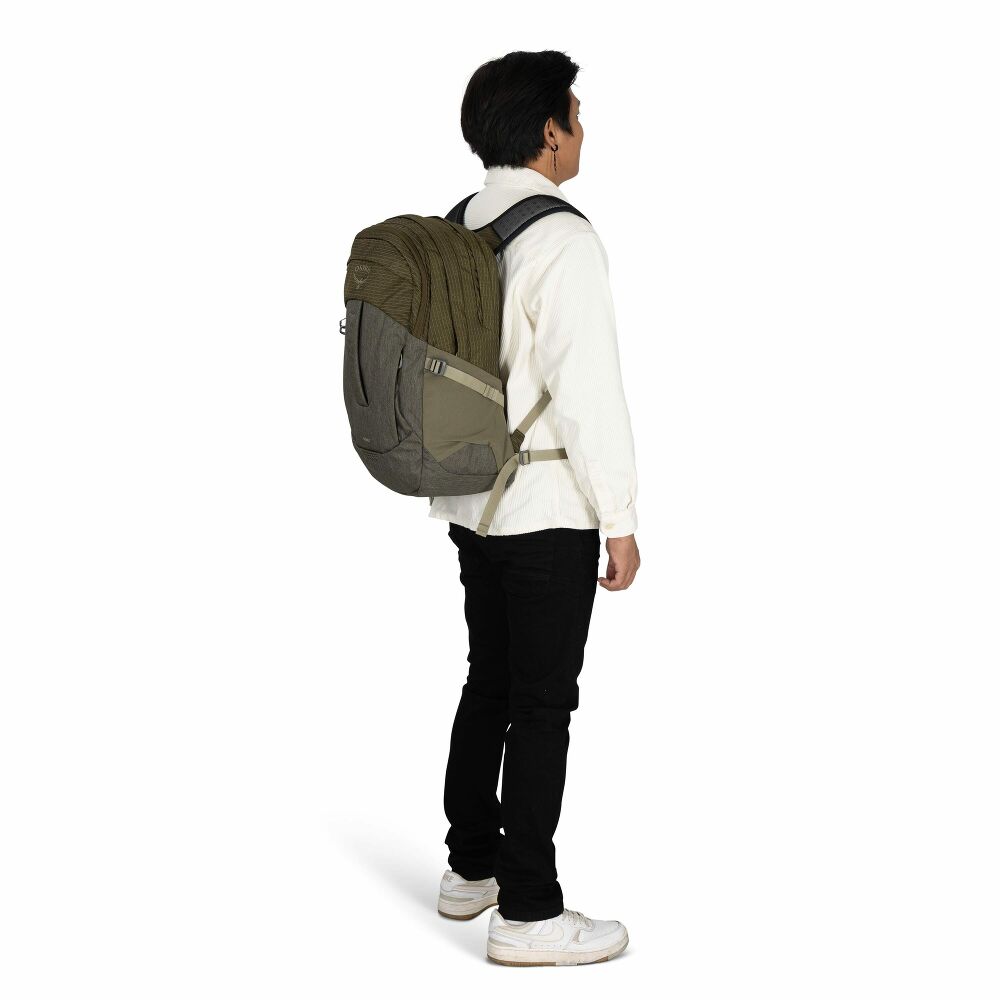
The Comet 30 can absolutely handle light hikes, day trips, trail walks, park adventures, and travel days where you are walking for hours.
It has the space and comfort to carry layers, snacks, a water bottle, camera gear, and a small emergency kit.
However, this is where the review needs to be honest: the Comet 30 is not the ultimate multi-day hiking backpack.
It does not have the same trail-first design as the Talon, Hikelite, Stratos, Exos, or other Osprey hiking lines.
Load-Bearing Capacity
For moderate loads, the Comet 30 should feel comfortable.
The structured backpanel and quality harness help distribute weight better than cheaper daily backpacks.
Where it becomes less ideal is heavy gear.
If you are carrying a full hydration reservoir, stove, food, rain gear, extra layers, first aid, trekking accessories, and overnight equipment, you may want a pack with a more substantial frame, more adjustable fit, and a real load-bearing hipbelt.
The removable web belt on the Comet is helpful for stabilization, but it is not designed like the padded hipbelts found on technical trail packs.
Comfort for Longer Days
For long travel days or campus days, the Comet 30 is a strong option.
If your current backpack sags, pulls on your shoulders, or turns into a black hole of tangled gear, the Comet will likely feel like a major upgrade.
For long hikes, comfort depends on how much you carry.
With a light-to-moderate load, it should perform well. With heavy trail gear, it is better to move into a pack designed specifically for hiking.
Hydration Compatibility
This is one area where buyers need to pay close attention.
Osprey’s official feature list for the Comet 30 emphasizes laptop storage, organization, water bottle pockets, backpanel comfort, and everyday versatility — it does not call out an integrated hydration reservoir sleeve.
That matters for hikers who prefer a bladder and hose system.
If hydration compatibility is a must-have, the Talon line is a better match — Osprey builds an internal hydration reservoir sleeve into models like the Talon 33.
Versatility for Travel and Daily Use
The Comet 30 is strongest when life refuses to stay in one category.
For Travel
As a travel backpack, the Comet 30 works best for short trips, personal-item travel, road trips, weekend packing, or as a companion to a roller bag.
It is not as suitcase-like as the Osprey Farpoint or Fairview, and it does not open like a clamshell travel pack.
But it gives you easy access, laptop separation, and enough organization for airports.
If you pack with cubes, use pouches, and keep clothing minimal, it can work for a short trip.
For longer one-bag travel, you may want more travel-specific structure — that’s exactly the comparison we break down in Osprey Farpoint 40 vs. Fairview 40.
For College and Work
This is probably the Comet 30’s strongest category.
Students and professionals often need the same things: laptop protection, daily organization, water bottle storage, durability, and comfort.
The separate laptop area makes it easier to remove your computer without unloading the whole bag.
The main compartment can handle books, folders, gym clothes, or a light jacket.
The smaller pockets keep daily essentials accessible.
For Outdoor Enthusiasts
For casual outdoor use, the Comet is a good hybrid.
It is more trail-capable than many office backpacks, but more office-friendly than many trail packs.
That makes it ideal for people who want a backpack that can go from a morning commute to an evening trail walk without looking out of place in either setting.
Want one backpack that works for class, commute, airport, and casual trails? Compare current Comet 30 colors →.
Osprey Comet 30 vs Daylite, Hikelite, and Talon
Choosing between Osprey backpacks can get confusing because several models overlap.
Here is the simple breakdown.
Comet 30 vs Osprey Daylite
Choose the Comet 30 if you want more organization, more laptop-friendly storage, and more daily-carry structure.
Choose the Daylite if you want something smaller, simpler, and lighter for quick errands, light hikes, or as an add-on daypack.
Osprey describes the Daylite as lightweight, simple, durable, and comfortable for errands, quick hikes, or heading out of town.
The Daylite family is great when you want a smaller bag.
The Comet is better when you want a daily backpack that can carry more.
Comet 30 vs Osprey Hikelite
Choose the Comet 30 if you need laptop storage, daily organization, and a cleaner commuter/travel setup.
Choose the Hikelite if hiking comfort, ventilation, and rain protection are higher priorities.
Osprey describes the Hikelite series as lightweight, ventilated, equipped with a raincover, and built around AirSpeed suspension for hikers.
The Hikelite is the better hiking daypack.
The Comet is the better everyday backpack that can hike occasionally.
Comet 30 vs Osprey Talon
Choose the Comet 30 if your main life is work, school, travel, and daily movement.
Choose the Talon if your main life is trails, technical day hikes, fast movement, biking, trekking poles, hydration reservoirs, and load stability.
Osprey describes the Talon 33 as a light-and-fast overnight or committed day-trip pack with a continuous-wrap harness and hipbelt, trekking pole and ice axe attachment points, and an internal hydration reservoir sleeve.
The Talon is much more technical.
The Comet is much more everyday-friendly.
Comet 30 vs. Non-Osprey Alternatives
If you’ve been cross-shopping outside the Osprey lineup too, here’s where the Comet 30 fits against the bags most people put on their shortlist.
Comet 30 vs. Patagonia Black Hole MLC
The Black Hole MLC (roughly $199–239 depending on size) is a clamshell-opening, suitcase-style backpack built for multi-day carry-on travel, not daily commuting.
It opens flat like a duffel, fits up to a 15-inch laptop, and trades everyday structure for trip-packing flexibility.
Choose the MLC if you’re packing for a trip. Choose the Comet if you want a bag that also has to work as your everyday carry between trips.
Comet 30 vs. Cotopaxi Allpa 35L
The Allpa (around $200) is another panel-loading travel pack, with a padded hipbelt and TPU-coated weatherproofing, plus Cotopaxi’s signature one-of-a-kind colorways.
It’s built more around travel days than office or campus days.
The Comet’s top-loading layout and dedicated laptop sleeve make it the better daily-use pick. The Allpa’s clamshell access and weatherproofing make it the better trip-packing pick.
Comet 30 vs. Peak Design Travel Backpack 45L
At around $300, the Peak Design is the most technical and most expensive bag in this comparison — modular packing cubes, expandable 35–45L capacity, and premium materials aimed at photographers and gear-heavy travelers.
It’s a different price tier entirely.
If you don’t need that level of modularity (or the price tag that comes with it), the Comet covers the same daily-carry-plus-occasional-travel ground for less than half the cost.
None of these is a universally “better” bag — there’s no single best pack for everyone, and the right call depends on whether you’re optimizing for daily use, trip packing, or specialized gear hauling.
The Comet 30’s advantage is being the only one in this group built primarily around regular daily carry, with travel as a secondary strength rather than the whole point.
If daily carry is the priority and travel is just a nice bonus, see current Comet 30 pricing →.
Pros and Cons
Pros
Excellent daily organization. The laptop compartment, organizer pocket, bottle pockets, and scratch-resistant pocket make it easy to keep essentials separated.
Comfortable for everyday carry, the AirScape backpanel and BioStretch harness give it a more supportive feel than basic school or office backpacks.
Versatile 30-liter capacity. It is roomy enough for work, school, travel, and light outdoor use without becoming a full-size travel pack.
Durable materials: The recycled nylon fabrics and reinforced bottom are well-suited for daily use, commuting, campus life, and travel.
Good laptop compatibility. The separate laptop compartment is a major selling point for students, remote workers, and travelers.
Cons
Not a true multi-day hiking pack It can handle day hikes, but it is not the best choice for heavy overnight loads or technical trail use.
No obvious hydration-reservoir focus If you want integrated hydration compatibility, look at Osprey’s trail-specific packs.
Hipbelt is basic The removable web belt helps stabilize the bag, but it is not a padded load-bearing hipbelt.
May be too large for minimal daily carry If you only carry a laptop, wallet, and keys, 30 liters may feel like more bag than you need.
Not suitcase-style for travel It works for travel, but it does not open like a dedicated travel backpack.
Frequently Asked Questions
Is the Osprey Comet 30 a good backpack?
Yes – it’s one of the more versatile 30-liter daily backpacks available, combining Osprey’s build quality and lifetime warranty with laptop protection, organization, and enough capacity for daily carry, travel, and light outdoor use.
Is the Osprey Comet 30 good for hiking?
It handles day hikes and light trail use well, but it’s not built for multi-day backpacking – it lacks a padded load-bearing hipbelt and hydration reservoir compatibility. For serious trail use, the Talon or Hikelite are better matches.
Can the Osprey Comet 30 be used as a carry-on or personal item?
Yes, for short trips, though it’s not suitcase-style like the Farpoint or Fairview. It works well as a personal-item-style travel bag paired with packing cubes, but check your specific airline’s size limits before flying.
What laptop size fits in the Osprey Comet 30?
The separate zip laptop compartment fits up to a 16-inch laptop.
How much does the Osprey Comet 30 weigh?
Just under 2 pounds (1.927 lbs), which is light for a structured 30-liter daily backpack.
Final Verdict: Who Should Buy the Comet 30?
The Comet 30 is best for the buyer who wants one dependable backpack for daily life with enough flexibility for travel and light outdoor use.
Buy it if you want:
- A comfortable daily backpack
- A separate laptop compartment
- Better organization than a hiking pack
- More capacity than a small commuter bag
- A bag that works for school, work, travel, and casual trails
- Osprey quality without going fully technical
Skip it if you need:
- A true overnight hiking backpack
- A padded load-bearing hipbelt
- Built-in hydration-first trail features
- Maximum ventilation for hot-weather hiking
- A clamshell travel backpack for one-bag trips
The buying decision comes down to your real use.
If 70% of your life is commuting, campus, office, travel, and daily carry — and 30% is light trail or outdoor use — the Comet 30 is a strong choice.
If 70% of your life is hiking, scrambling, hydration bladder use, and technical terrain, go Talon or Hikelite instead.
Best overall daily-and-travel pick: Comet 30. Best hiking-first alternative: Hikelite. Best technical-trail alternative: Talon.
Compare current Comet 30 pricing before you buy →.
For most everyday travelers, students, and commuters, the Comet 30 is the most balanced option.
It gives you comfort, organization, capacity, and durability in one clean package.
It is not the most technical backpack Osprey makes. That is actually the point.
It is the backpack for people who need their bag to work in real life — from class to airport security, from office desk to weekend trail, from daily errands to spontaneous overnight plans.
Ready to stop overpacking and just grab one bag that works?
This post contains affiliate links. If you buy through them, 12xTravel may earn a commission at no extra cost to you — we only recommend gear we’ve actually researched.


Leave a Reply