

Osprey Packs Review: Pros, Cons, Best Models, and Value for Travelers
If you are shopping for a backpack that can handle airport sprints, hostel stairs, day hikes, and months of repeat use,

Osprey is one of the first brands worth serious attention. Founded in 1974, the company has built its reputation around technical fit, durable construction, and one of the strongest repair-and-replace policies in the category.
Table of Contents
Osprey’s lineup now stretches well beyond hiking packs into travel backpacks, wheeled luggage, commute bags, and everyday carry, which makes it especially relevant for solo travelers who want one trusted brand across multiple trip styles.
This review is written with solo travel in mind, especially for women who want a reliable carry system, digital nomads who live out of their bags, and adventurous travelers who need a backpack that feels stable, organized, and comfortable under real movement. In that context,
Osprey stands out for three reasons: comfort-oriented suspension systems, broad travel-specific options like the Farpoint/Fairview and Sojourn Porter lines, and the All Mighty Guarantee, which promises repair or replacement for damage or defects on most products, with a few clearly stated category exceptions.
Is Osprey a Good Brand?
Short answer: yes, and it’s not close.
Osprey has built its reputation over five decades on two things most backpack brands treat as afterthoughts — fit and durability. Every Osprey pack we’ve tested uses a properly engineered harness system, which sounds minor until you’re six hours into a travel day and your shoulders aren’t screaming.
The bigger trust signal is the All Mighty Guarantee — Osprey’s promise to repair or replace damage or defects on most products, no matter how old the bag is. That’s a meaningfully different commitment than most competitors make, and it’s the single biggest reason we recommend Osprey to travelers who want one bag they won’t need to replace in two years.
Is Osprey a good brand for everyone? No — see “Where Osprey Can Fall Short” below. But as a baseline for build quality, warranty support, and fit engineering, Osprey earns its reputation.
Brand Overview and History
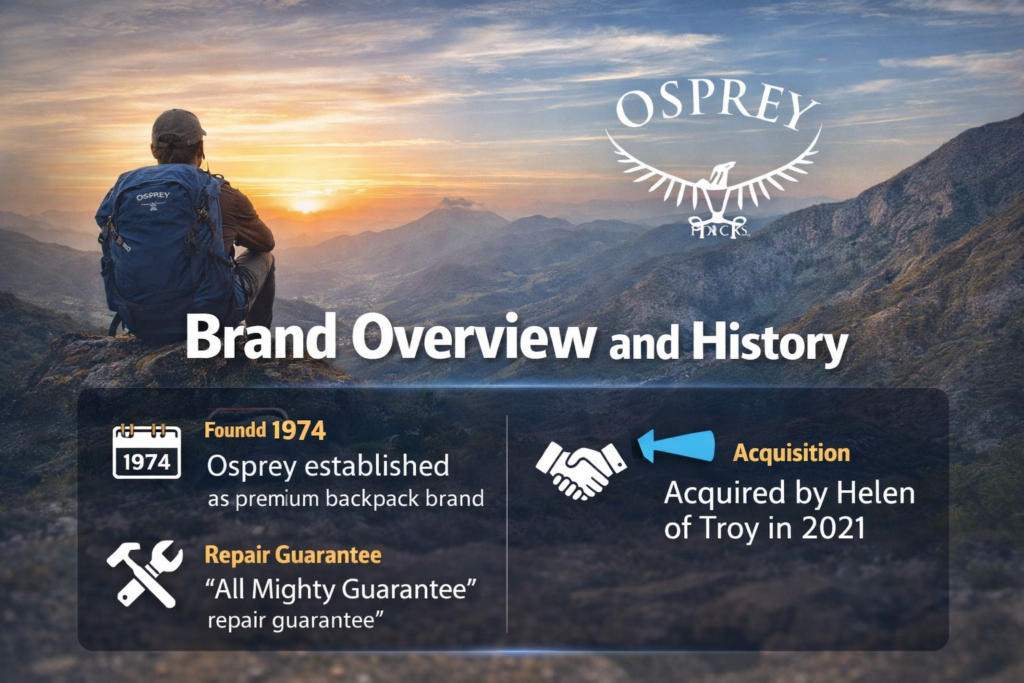
Osprey started in 1974 and grew into one of the most recognizable names in premium backpacks.
The brand’s current positioning still leans heavily on technical design, fit, and longevity rather than fast-fashion travel gear. In practical terms, that matters because travelers buying into Osprey are usually not paying for trends.
They are paying for better load carry, thoughtful pocket design, and the expectation that the bag will survive years of use.
The company also sits inside a larger brand portfolio now.
Helen of Troy completed its acquisition of Osprey in late 2021, but Osprey continues to operate as a distinct outdoor and travel brand.
For buyers, that does not automatically change product quality, but it is a helpful context when evaluating long-term customer support and brand stability. (Helen of Troy Limited)
Another important part of the brand story is repairability.
Osprey emphasizes durability, field testing, and repairability in its sustainability messaging, which aligns well with travelers who would rather invest once than replace cheap luggage every year or two.
For a solo traveler, especially, fewer gear failures on the road means less stress, fewer surprise costs, and fewer safety compromises.
Product Range Analysis
Osprey’s product range is broad enough that you can easily shop for the wrong model if you do not narrow your use case first. The good news is that the brand has distinct families that make shopping easier once you know how you travel.
Best Osprey Lines for Travel
For classic one-bag travel, the Farpoint/Fairview family is still one of Osprey’s strongest offerings. The brand describes these as lightweight travel backpacks and wheeled packs built for global travel, combining backpack suspension with travel organization and comfortable fit.
That is exactly why these are so popular with hostellers, gap travelers, and frequent flyers who need more support than a boxy suitcase can offer.
For travelers who want something more rectangular and luggage-like, the Sojourn Porter line is a strong alternative.
The 30L, 46L, and 65L models are built around padded sidewalls, compression features, and travel-friendly organization.
The 46L is explicitly positioned as a carry-on-friendly travel workhorse, which makes it especially appealing for digital nomads or solo travelers trying to avoid checked-bag fees.
Looking specifically for a women’s small travel backpack? Our Best Small Travel Backpack for Women guide compares the Daylite 26+6, Tempest 22, Sirrus 24, and other top picks by fit and use case.
For personal-item travel and lighter urban trips, the Daylite family deserves attention. Osprey describes the standard Daylite as lightweight, simple, durable, and versatile enough for errands, quick hikes, and travel.
The Daylite Expandable Travel Pack 26+6 is particularly interesting because it is designed to maximize airline personal-item standards and expand into a larger carry format.
That flexibility is a big win for budget-conscious solo travelers hopping between airlines with different baggage rules.
Best Osprey Lines for Adventure and Mixed Use

If your trips mix city exploration with trail time, the Talon/Tempest family is one of the most useful crossover lines in the catalog.
Osprey positions Talon/Tempest as lightweight, technical, multi-sport backpacks built for dynamic movement, with ventilated comfort and versatility across hiking, biking, and fast-moving adventures.
For adventure solo travelers, that makes them better suited than heavier travel packs when movement efficiency matters.
Osprey also has dedicated hiking, backpacking, commuting, and luggage categories, plus extended-fit options designed with in-field testers for bigger bodies. That wider range is one of the brand’s major strengths.
Once you trust the fit and build quality, you can often stay inside the same ecosystem for different trip types.
Ready to compare models? Check today’s price and available colors for the Osprey line that fits your travel style before the best sizes sell out.
Quality and Performance Testing
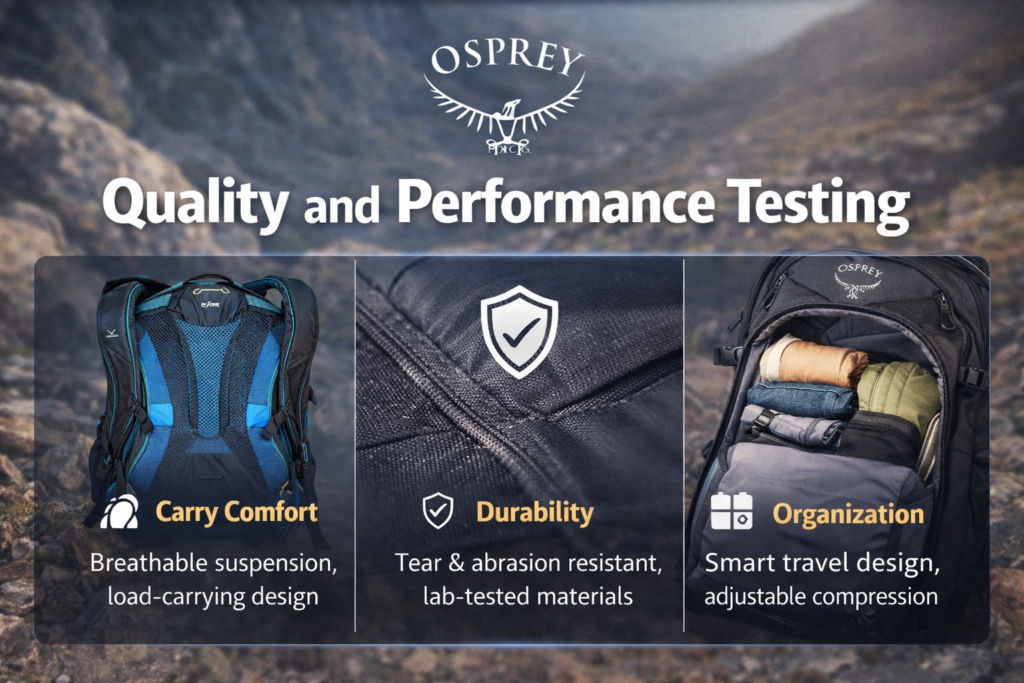
The real question is not whether Osprey makes good-looking packs. It is whether they perform well enough to justify premium pricing.
In my assessment, Osprey’s biggest performance advantage is carry comfort under load.
The brand has spent decades building around suspension, backpanel design, and fit systems.
You can see that across categories:
AirScape backpanels show up in travel models like the Sojourn Porter and Daylite Expandable Travel Pack, while technical collections like Talon/Tempest are clearly engineered for stability during active movement.
That matters a lot for solo travelers. When you are alone, your bag is not just luggage. It is your mobile base.
You may be carrying it through transit stations, late-night check-ins, cobblestone streets, ferry docks, or a long uphill walk to a guesthouse.
A pack that rides well on your body reduces fatigue and lets you stay more aware of your surroundings, which is an underrated safety benefit.
The second major strength is the durability philosophy.
Osprey states that it subjects products to field testing, athlete evaluations, and lab testing, including tear, abrasion, and waterproofing tests, and that the company’s guarantee is built around repairability rather than disposability.
That does not mean every model is indestructible, but it does show a brand-level commitment to longevity.
The third strength is practical organization.
Travel lines like Farpoint/Fairview and Sojourn Porter are designed around easy packing, compression, and adaptable travel use, while Daylite gives lighter travelers a compact, flexible option.
Osprey tends to design for people actually moving through airports and trails, not just posing with the bag in photos.
Where Osprey Performs Best
Osprey performs best for:
- carry-on travelers who want a backpack instead of rolling luggage
- solo travelers who care about comfort and security over ultra-cheap pricing
- digital nomads who use one bag constantly
- active travelers mixing urban and outdoor use
Where Osprey Can Fall Short
Osprey is not perfect. Some travelers will find the brand expensive compared with budget backpack brands. Others may prefer a more minimalist aesthetic or lighter structure. And if you only travel once a year for short hotel stays, the extra engineering may be more than you need.
For ultra-budget buyers, Osprey can feel like a high upfront spend. For ultralight purists, some travel models may also feel heavier or more feature-rich than necessary. Those are real tradeoffs.
If comfort matters more than buying the cheapest bag once, this is the point where Osprey starts making financial sense. Compare the current Osprey travel models and pick the one sized for your trip length.
Customer Service Experience
Customer service is a major part of the Osprey value proposition because the brand’s promise is not just about the day you buy the pack. It is about what happens years later.
The strongest proof point is the All Mighty Guarantee. Osprey states that it will repair or replace damage or defects at no cost on most products, “whether your bag was produced in 1974 or yesterday,” with limited-duration exceptions for certain categories, such as Poco child carriers, avalanche airbag packs, and Raptor Pro.
That is one of the most generous policies in the backpack market and a major reason many travelers view Osprey as a long-term investment rather than a short-term purchase.
On the retail side, Osprey’s current U.S. site states that orders qualify for free returns, and its knowledge base says customers generally have 30 days from receipt to initiate a return for eligible direct purchases.
That is a solid standard for online gear buying, especially when fit and capacity are easier to judge in person than on a product page.
That said, customer service is easiest when you buy directly from authorized sources and keep your expectations aligned with the policy. Returns, warranty issues, and category exceptions are always smoother when purchase channels are clear.
Pricing and Value Assessment
Osprey is firmly in the premium segment, but not at the very top end of luxury travel gear. Current official-site examples show a broad range.
The Sojourn Porter 30L is listed at $180, the 46L at $195, and the 65L at $230.
The Farpoint 40 has appeared at a discounted past-season price of $111 from $185, while specialty or collaboration models can run higher.
Why Are Osprey Backpacks So Expensive?
Osprey packs typically run $150–$300+, a real jump from budget travel backpacks in the $50–$80 range. Here’s what that difference is actually paying for:
- Durable, field-tested fabrics rated for years of airport, bus, and cobblestone abuse — not just a season
- Purpose-built harness systems rather than generic strap-and-buckle setups
- Lifetime repair coverage through the All Mighty Guarantee, so the true cost over 5-10 years of use is often lower than replacing a cheaper bag two or three times
- Resale value — Osprey packs hold value on the used market far better than off-brand alternatives, because buyers know the warranty transfers
The math worth running: divide the price by how many trips you expect to use it for. A $220 backpack used on 20 trips over 5 years costs $11/trip. A $70 backpack that needs replacing after 15 trips costs more per trip once you factor in the replacement.
So, is it worth the investment?
For the right buyer, yes.
If you are a solo traveler taking multiple trips per year, a digital nomad living out of one bag, or an adventure traveler who needs comfort and dependability,
Osprey often delivers better long-term value than replacing a cheaper pack every 12 to 18 months. The repair guarantee strengthens that math even further.
If you travel rarely, always check luggage, or only need a simple weekend bag, the premium may be harder to justify. In that case, Osprey can still be a great buy, but it becomes more of a preference purchase than a practical necessity.
See which Osprey packs are currently discounted. Past-season colors and sizes often offer the best entry point into the brand.
Before choosing a pack, make sure it fits your airline’s carry-on rules. Our luggage size and weight calculator can help you check whether your backpack is likely to meet common airline limits before your trip.
Pros and Cons Summary
Pros
- Excellent carry comfort and body-hugging fit across major categories
- Wide range of travel, hiking, and everyday models for different trip styles
- Outstanding repair-and-replace reputation through the All Mighty Guarantee
- Good options for carry-on, personal-item, and mixed-use travel
- Strong durability focus and repairability mindset
Cons
- More expensive than many entry-level travel packs
- Some models may feel overbuilt for casual travelers
- The lineup is large enough that beginners can easily choose the wrong pack
- Certain product categories have more limited guarantee terms than the core policy.
How Osprey Compares to Other Travel Backpack Brands
Osprey isn’t the only serious option, and depending on your priorities, it might not be the right one for you:
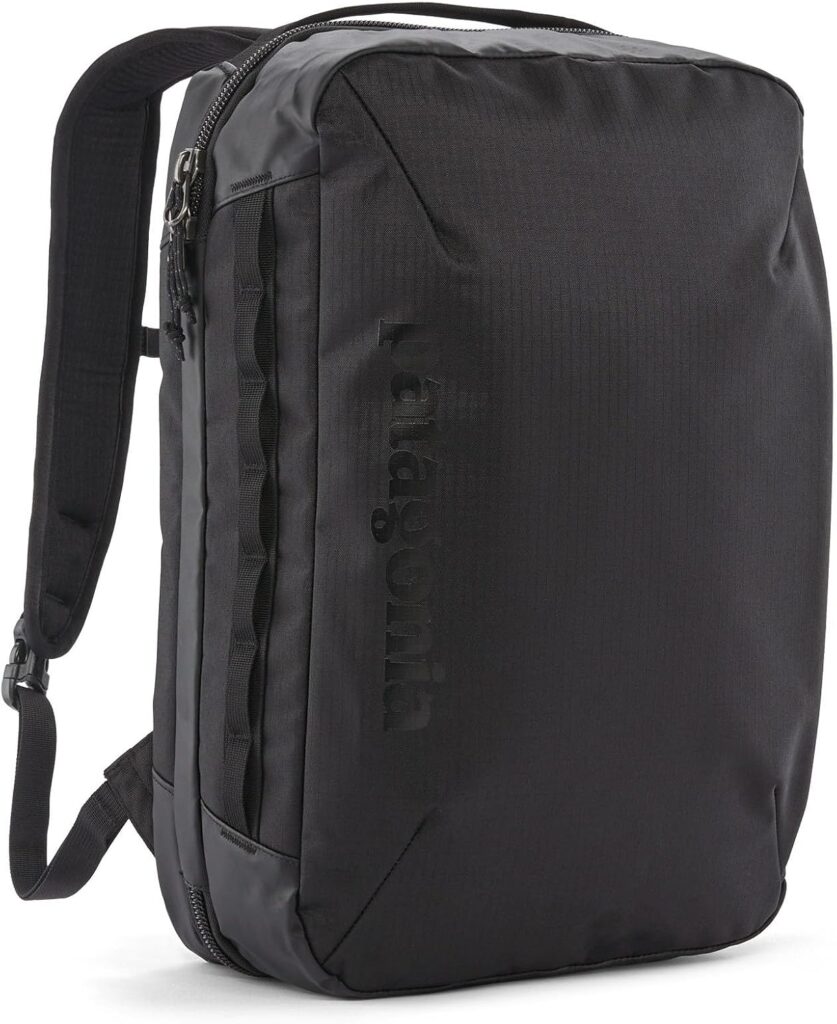
Patagonia Black Hole MLC – better if you want a more casual, less “backpacker” look with a similar carry-on size
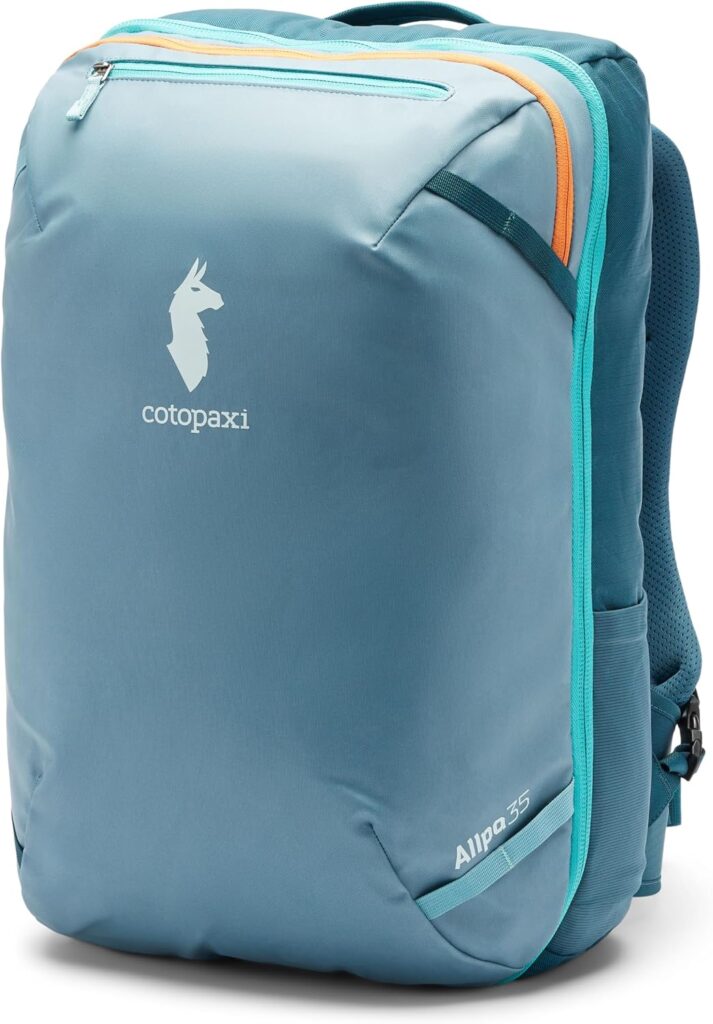
Cotopaxi Allpa 35L – better if you want a color-blocked, more compact carry-on with a different organizational layout
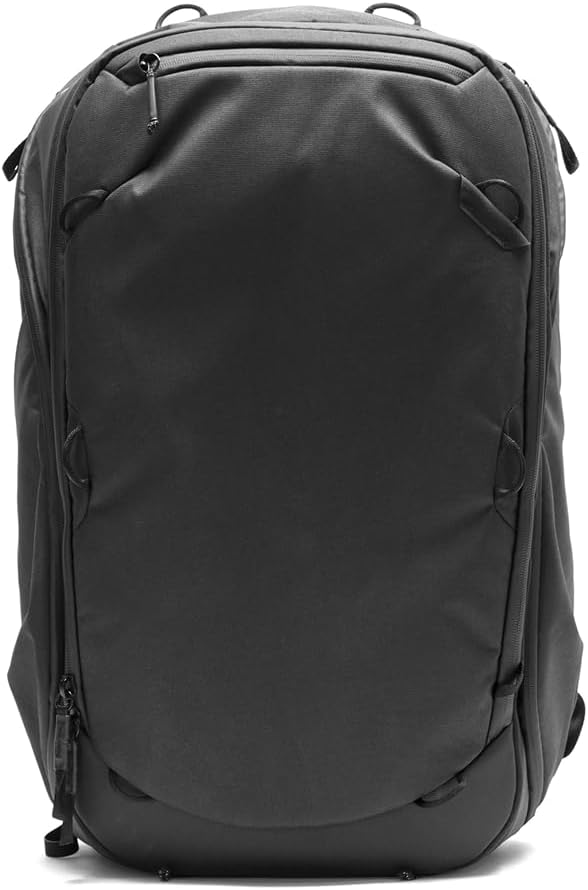
Peak Design Travel Backpack 45L – better if camera gear protection and modular packing cubes are your top priority
None of these are “worse” brands – they’re built for slightly different travelers. If fit, warranty, and long-term durability are your top priorities, Osprey tends to win. If a specific feature matters more to you, one of the above might fit better.
Frequently Asked Questions
Is Osprey worth it?
For travelers who take more than a couple of trips a year, yes. The combination of fit, durability, and lifetime warranty typically outweighs the higher upfront cost within a few uses.
Are Osprey backpacks good for travel, not just hiking?
Yes – while Osprey started in outdoor/hiking gear, its travel-specific lines (Farpoint/Fairview, Sojourn Porter, Daylite) are purpose-built for carry-on travel, with organization and dimensions suited to airports and city trips rather than trail-only use.
Why are Osprey backpacks so expensive compared to other brands?
The price reflects durable materials, purpose-built harness engineering, and a lifetime repair warranty – costs that cheaper bags typically cut to hit a lower price point.
Is an Osprey backpack worth it for a single short trip?
If it’s genuinely a one-time trip, a cheaper bag may make more financial sense. Osprey’s value comes from repeated use over years, not a single trip.
Are Osprey bags good for solo female travelers specifically?
Yes – models with women’s-specific harness sizing (like the Fairview line) are built around load-bearing needs that generic unisex bags often overlook, which matters for comfort on long travel days.
Final Recommendation
This Osprey packs review comes down to one simple conclusion: Osprey is worth the investment for travelers who will actually use the engineering.
If you want a pack that carries comfortably, lasts for years, and gives you a real support policy behind the purchase, Osprey remains one of the safest premium backpack buys in 2026.
For female solo travelers, that value shows up in comfort, mobility, and confidence.
For digital nomads, it shows up in repeat-use durability and travel-friendly organization.
For adventure solo travelers, it shows up in stability and performance when the trip stops being smooth and predictable.
My recommendation is this:
Best for Most Solo Travelers
Choose Farpoint/Fairview if you want a true travel backpack with support and structure.
If you’re planning your first solo trip, pair the right backpack with a smart destination plan. Our guide to the safest cities for solo female travelers can help you choose places that feel comfortable, practical, and confidence-building.
Best for Digital Nomads
Choose Sojourn Porter if you want more rectangular, gear-efficient packing with strong travel utility.
Best for Lightweight Everyday and Personal-Item Travel
Choose Daylite or Daylite 26+6 if you want flexibility, lighter carry, and urban-friendly use.
Best for Trail-to-City Adventure Travel
Choose Talon 22 if your trips mix movement, hiking, and active days.
In the end, Osprey is not the cheapest option. It is the option I would point travelers toward when they want fewer regrets, fewer replacements, and a better experience every time they shoulder the bag.
>>View our complete guide to Osprey packs, products, and services here


Leave a Reply