
Portable Power Station Review
Travel is easier when your gear actually stays charged.
Whether you’re navigating an airport, road-tripping with kids, camping off-grid, working remotely from a cabin, or taking a glamping trip with your partner, power has become part of the travel checklist.
Phones, tablets, laptops, cameras, drone batteries, lights, fans, and portable coolers all compete for outlets. That is exactly why portable power stations have become one of the smartest travel upgrades in 2026.
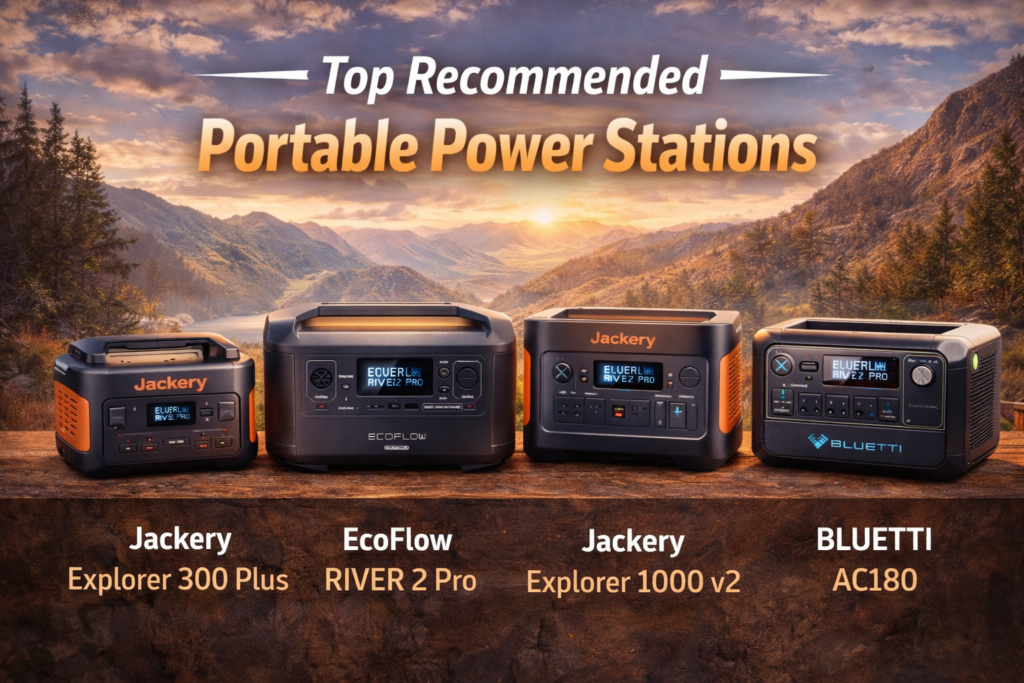
The challenge is that there are now too many options. Some look powerful but are too heavy to travel with comfortably.
Others are compact but do not have enough capacity for real multi-device use. And plenty of review pages simply repeat manufacturer claims without helping you understand which model fits your travel style.
This guide is built to fix that.
In this portable power station review, we compare the best options for luxury travelers, backpackers, families, and road trippers based on the four factors that matter most: weight, battery capacity, output power, and overall value.
Across the current market, the strongest travel-friendly models increasingly use LiFePO4/LFP batteries, which are promoted for longer cycle life and better durability than many older battery chemistries. (Jackery)
Why Your Next Trip Needs a Portable Power Station
A standard power bank is useful for one phone. A portable power station is something different.
It can charge multiple devices at once, power laptops and cameras, and in larger models, even run small travel appliances.
That matters more than ever for modern travelers because “running out of battery” does not just mean inconvenience anymore.
It can mean losing access to boarding passes, hotel reservations, navigation, rideshare apps, translation tools, or emergency contacts.
For couples, a portable power station helps make luxury travel feel smoother and less dependent on badly placed hotel outlets or crowded airport charging zones.
For solo backpackers, it can be the difference between having enough power for maps, messaging, and photos versus rationing every charge.
For families, it becomes a central power hub for tablets, phones, speakers, travel fans, camera batteries, and more.
It can also reduce hidden travel costs. Instead of buying emergency chargers, replacing cheap cables, or paying for access to outlets in lounges and premium spaces, you bring your own reliable power with you.
Because portable power stations can add noticeable weight to your bags, use our airline luggage size and weight calculator before flying with your travel gear.
How We Tested & What Matters Most
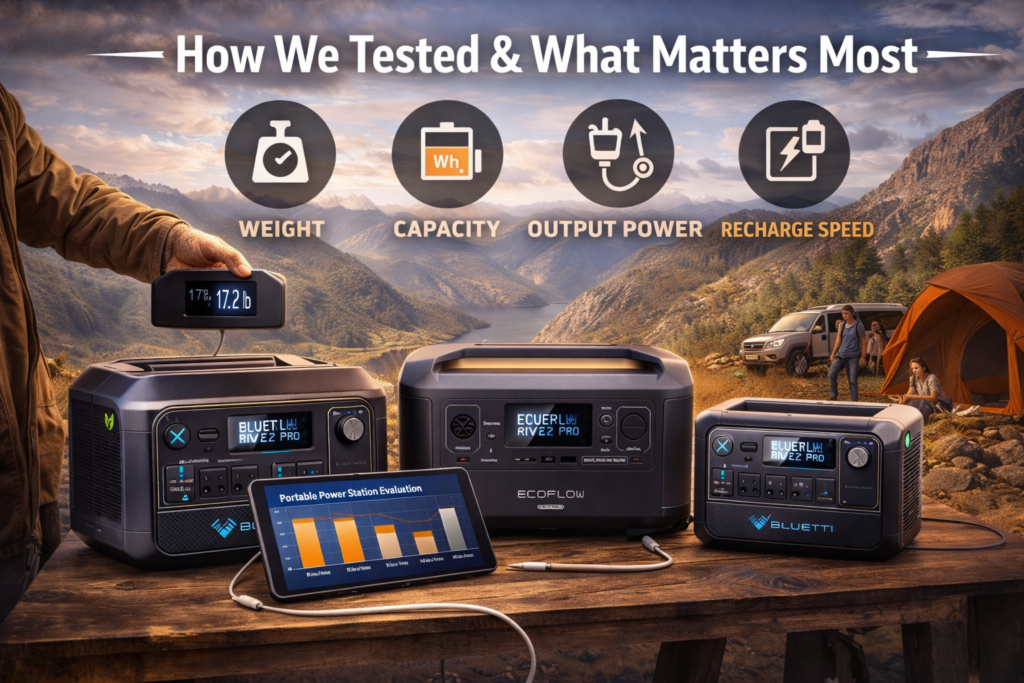
There is no single “best” portable power station for every traveler. The right choice depends on how you move, what you charge, and how much weight you are willing to carry.
Weight and portability
If you are moving through airports, train stations, hostels, or small rental cars, weight matters a lot.
A 35-pound power station may work for a family campground, but it is a poor fit for minimalist travel.
Smaller units like the Jackery Explorer 300 Plus are designed around compact travel use, while larger models like the BLUETTI AC180 are better suited for car-based trips and longer stays. (BLUETTI-US)
Capacity
Battery capacity is measured in watt-hours. In simple terms, that tells you how much energy the unit stores.
- Around 250–300Wh works well for phones, tablets, cameras, and light laptop use.
- Around 700–800Wh is a strong middle ground for families, couples, and longer travel days.
- Around 1000Wh+ is where portable power stations become much more useful for shared use and small appliances.
For example, the Jackery Explorer 1000 v2 is listed at 1070Wh, the EcoFlow RIVER 2 Pro at 768Wh, and the BLUETTI AC180 at 1152Wh. (Jackery)
Output power
Capacity tells you how long a power station can run devices. Output tells you what it can run at all.
The EcoFlow RIVER 2 Pro is rated at 800W, the Jackery Explorer 1000 v2 at 1500W, and the BLUETTI AC180 at 1800W AC output. That difference matters if you want to power more than phones and laptops. (Jackery)
Recharge speed
Fast recharge is one of the most underrated features for travel. If you only have a short window at a hotel, rest stop, or rental cabin, you want a unit that can refill quickly.
Jackery says the Explorer 1000 v2 can go from 0–100% in 1 hour.
EcoFlow says the RIVER 2 Pro can recharge from 0–100% in 70 minutes.
BLUETTI says the AC180 can go from 0–80% in 45 minutes with high AC input. (Jackery)
Best for Luxury Travel & Glamping: Jackery Explorer 1000 v2
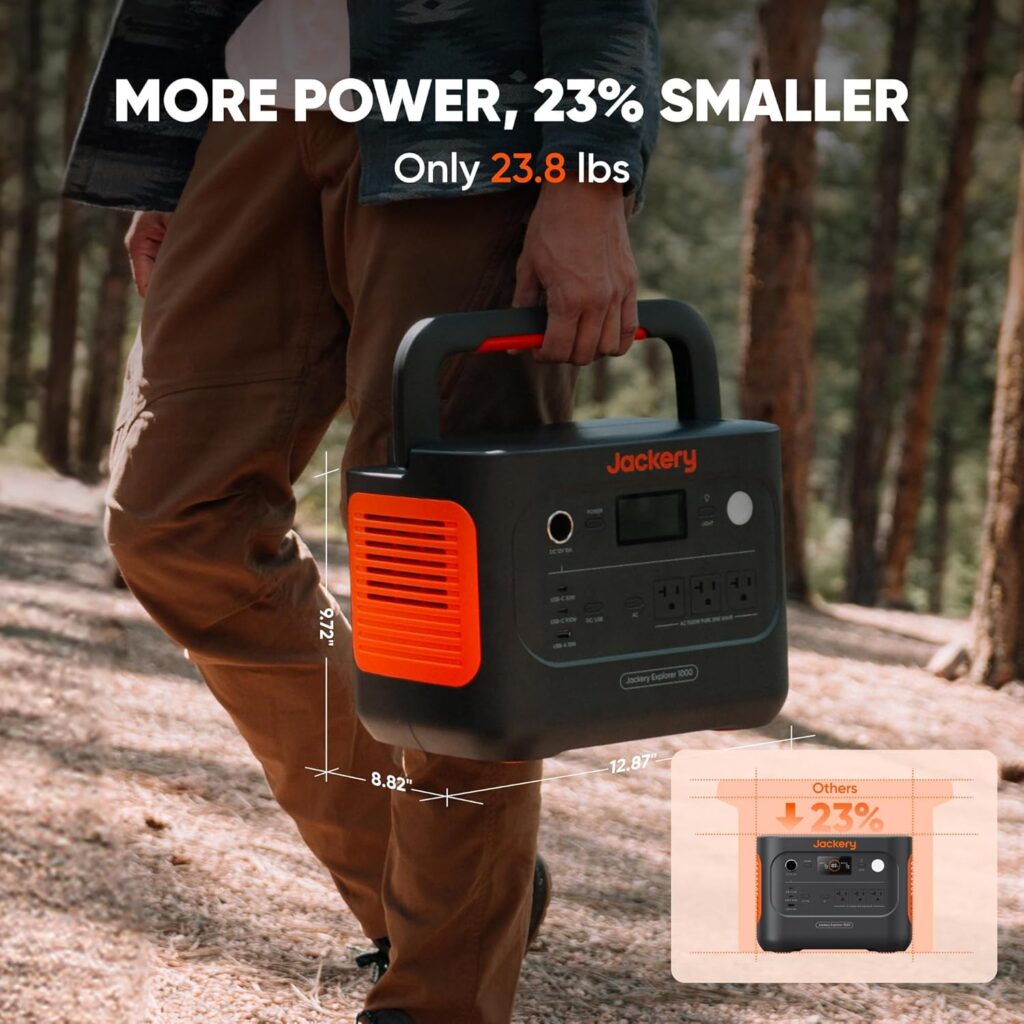
If you want a portable power station that feels premium, capable, and easy to recommend, the Jackery Explorer 1000 v2 is one of the strongest choices in 2026.
Jackery lists it at 1070Wh capacity, 1500W output, and 0–100% recharge in 1 hour, along with dual 100W USB-C ports and a lighter design than many older 1000Wh-class units. (Jackery)
For luxury-seeking couples and glamping travelers, this is the kind of unit that makes travel feel easier instead of more rugged. It gives you enough headroom for phones, tablets, laptops, cameras, lights, and select small appliances without constantly thinking about what to unplug next.
Why it stands out
- Premium balance of size and real-world power
- Great for couples sharing devices
- Better suited for scenic cabins, upscale camping, and glamping stays
- Fast enough recharge to stay convenient between destinations
Pros
- Strong 1070Wh capacity for travel
- 1500W output handles more than basic electronics
- Very fast recharge time
- Good premium pick for couples and longer stays
Cons
- More expensive than entry-level models
- Still heavier than true lightweight travel options
Jackery Explorer 1000 v2
Best for luxury travel, glamping, and couples who want fewer compromises.
Best feature: Premium mix of high capacity, fast charging, and strong output.
Check today’s price for the Jackery Explorer 1000 v2 and compare solo unit vs solar bundle options.
Best for Budget Backpacking: Jackery Explorer 300 Plus
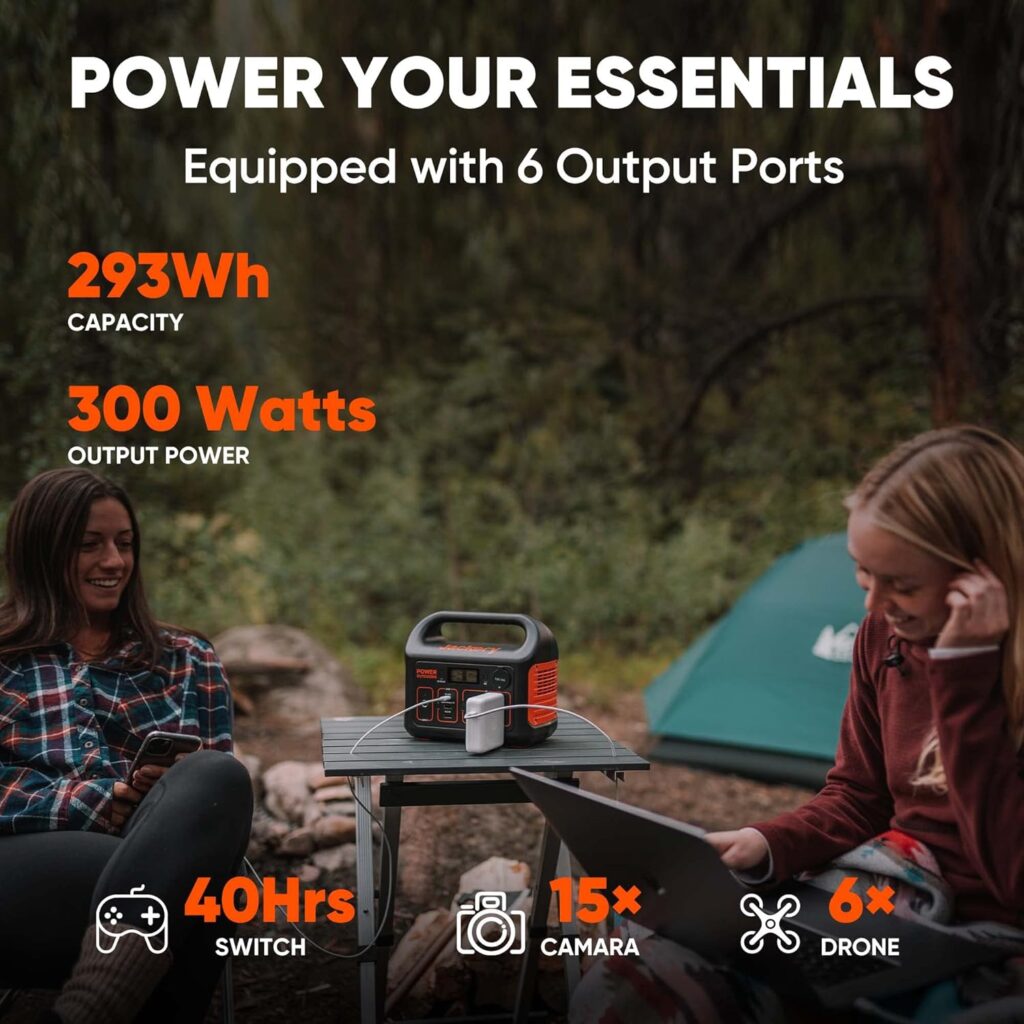
If your priority is staying light, affordable, and practical, the Jackery Explorer 300 Plus is one of the better backpacker-friendly choices.
Jackery lists it at 288Wh capacity with 300W output, and markets it as a compact, travel-oriented unit with USB-C support and a lighter carry profile. (Jackery)
For budget-conscious solo travelers, that is often enough. You are not trying to power a full campsite kitchen. You want to keep your phone, earbuds, power bank, camera batteries, and maybe a small laptop charged without carrying a bulky brick.
Why it stands out
- Travel-friendly size
- Enough power for the essentials
- Easier to justify for backpackers and budget travelers
- Better flexibility than a basic power bank
Pros
- Lightweight and compact
- Affordable entry into the category
- Good fit for hostels, trains, buses, and weekend trips
- Simple and easy to use
Cons
- Not enough capacity for larger family needs
- Limited for appliances or high-draw devices
Jackery Explorer 300 Plus
Best for solo travelers, backpackers, and light packers.
Best feature: Compact enough for real travel without losing core usefulness.
See the Jackery Explorer 300 Plus here if you want a lighter, lower-cost travel power option.
Best for Family Road Trips & Camping: EcoFlow RIVER 2 Pro
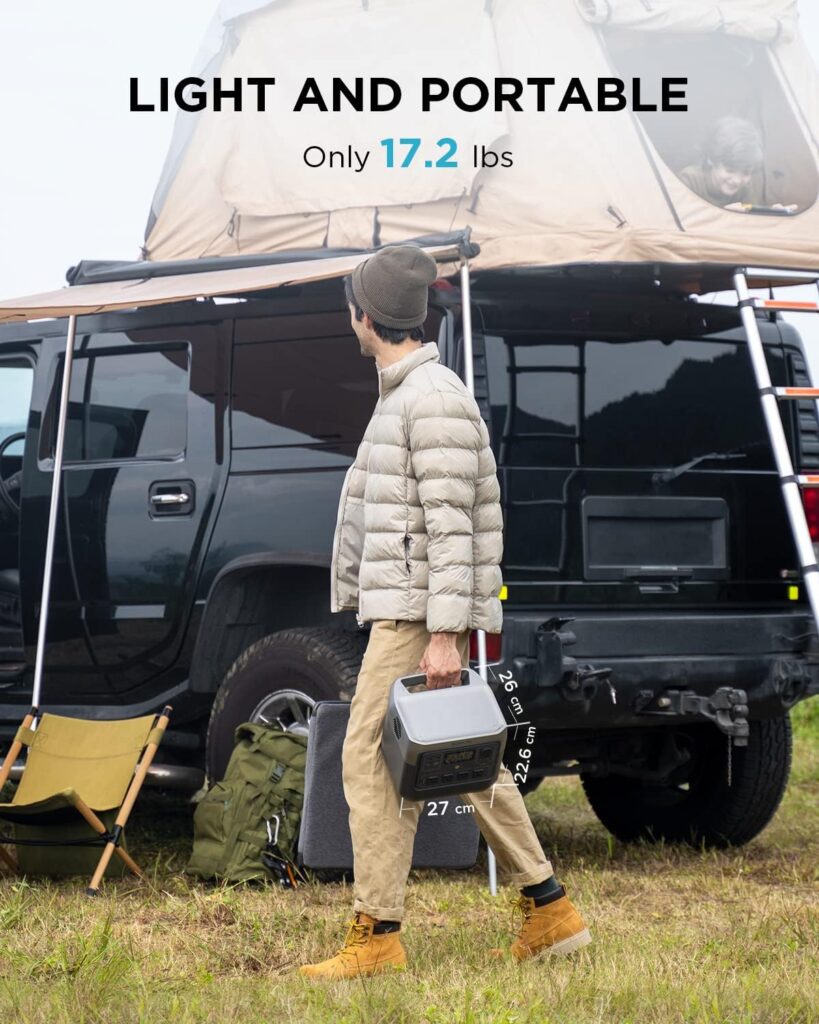
For families, the sweet spot is usually not the smallest model and not the biggest. It is the one that gives you enough power without becoming a burden to carry.
That is where the EcoFlow RIVER 2 Pro fits well. EcoFlow lists it at 768Wh capacity, 800W output, app control, and 0–100% recharge in 70 minutes. EcoFlow also notes the RIVER 2 Pro uses an LFP battery and lists its weight in the RIVER 2 series at around 18.2 pounds.
For family travel, that combination makes a lot of sense. It is large enough to support multiple people charging at once, but not so oversized that it feels ridiculous in an SUV, cabin rental, or campground setup.
Why it stands out
- Enough capacity for multi-device family use
- Better portability than many 1000Wh+ units
- App controls are genuinely useful
- Strong all-around value for road trips and camping
Pros
- Great travel-to-power balance
- Fast recharge
- LFP battery
- Good fit for families and couples alike
Cons
- Not as powerful as larger 1000Wh+ units
- May still be more than solo travelers need
Product Box Copy
EcoFlow RIVER 2 Pro
Best overall for family road trips, car camping, and shared travel use.
Best feature: The best balance of portability, capacity, and recharge speed.
Check the latest EcoFlow RIVER 2 Pro pricing here before your next trip.
Best for Bigger Family Setups: BLUETTI AC180
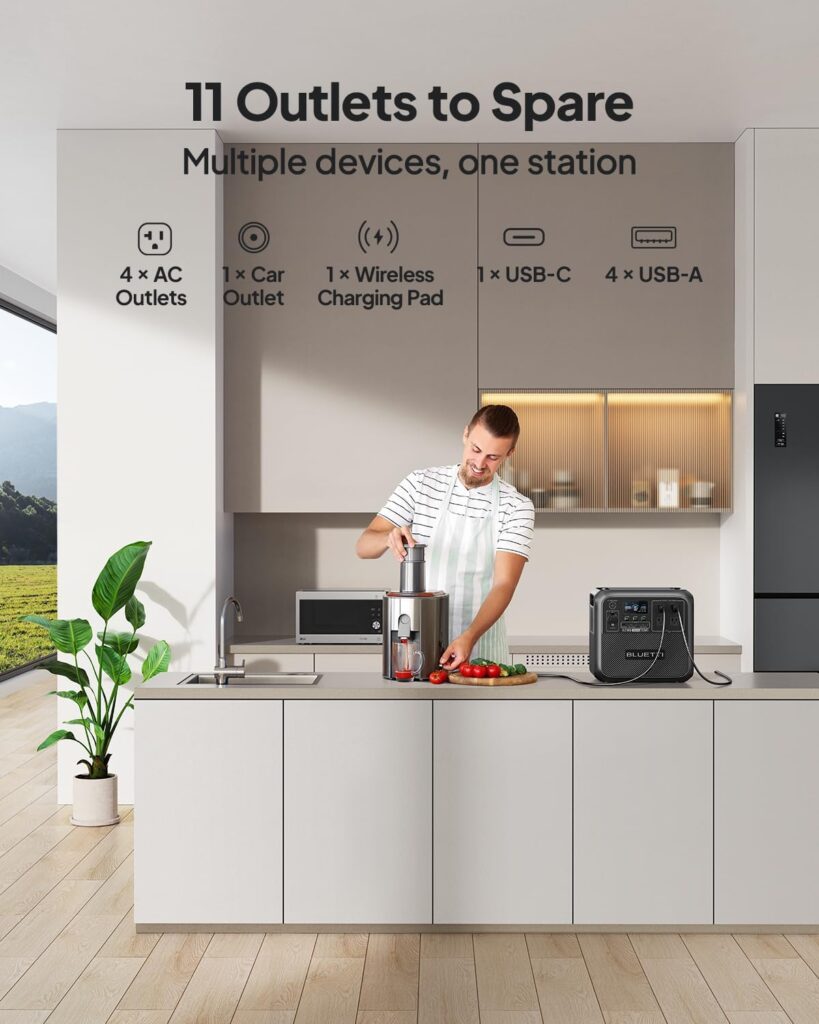
If your travel style involves longer camping stays, cabin rentals, appliance use, or just a lot of people sharing power, the BLUETTI AC180 deserves a serious look.
BLUETTI lists the AC180 at 1152Wh capacity, 1800W AC output, up to 11 output ports, app control, and 0–80% recharge in 45 minutes. BLUETTI also lists its weight at about 16 kg, which is roughly 35 pounds, so this is clearly not a minimalist travel pick.
This is the model for travelers who want headroom. If you want to run more gear, worry less, and make one unit do more, the AC180 is one of the stronger options in this class.
Why it stands out
- Big usable capacity
- High AC output for more demanding gear
- Better for larger families and longer stays
- Strong feature set for cabin and car-based travel
Pros
- Excellent power for the size category
- High-output AC performance
- Fast recharge
- App support and multiple ports
Cons
- Heavy
- Less convenient for frequent moving or air travel contexts
BLUETTI AC180
Best for larger family trips, cabins, and heavier power needs.
Best feature: More output and capacity with fewer compromises.
See the BLUETTI AC180 here if you want more power for longer stays and bigger travel setups.
Head-to-Head Comparison Chart
| Model | Best For | Capacity | Output | Recharge Claim | Main Tradeoff |
|---|---|---|---|---|---|
| Jackery Explorer 300 Plus | Backpackers, solo travel | 288Wh | 300W | Compact/light category | Limited for bigger needs |
| EcoFlow RIVER 2 Pro | Families, road trips | 768Wh | 800W | 0–100% in 70 min | Mid-tier power ceiling |
| Jackery Explorer 1000 v2 | Luxury travel, glamping | 1070Wh | 1500W | 0–100% in 1 hour | Higher price |
| BLUETTI AC180 | Big family setups, cabins | 1152Wh | 1800W | 0–80% in 45 min | Heavier to carry |
Specs shown above are based on the current manufacturer’s product pages.
Real-World Usage Scenarios
For a couple booking a premium glamping trip
Go with the Jackery Explorer 1000 v2. It offers enough capacity and output to feel premium, not restrictive.
For a budget solo backpacker
Go with the Jackery Explorer 300 Plus. It is easier to carry, easier to justify on budget, and still useful.
For a family SUV road trip
Go with the EcoFlow RIVER 2 Pro. It is the best all-around balance for shared travel power.
For cabins, campgrounds, and longer family stays
Go with the BLUETTI AC180. It is heavier, but much more capable.
Adventure Travel
Portable power stations are especially useful for road trips, camping, van travel, and remote outdoor adventures. For more planning help, read our guide on how to choose the right adventure travel experience before deciding what gear you actually need.
Final Verdict
If you want the simplest answer, here it is:
- Best overall for most travelers: EcoFlow RIVER 2 Pro
- Best premium pick: Jackery Explorer 1000 v2
- Best lightweight budget pick: Jackery Explorer 300 Plus
- Best for bigger family power needs: BLUETTI AC180
The right choice comes down to one question: Are you trying to carry less, or power more?
If you mostly need phones, tablets, cameras, and laptop charging, stay smaller. If you are powering a family trip or want real flexibility at camp, step up in capacity. If you want the most balanced pick for travel, the EcoFlow RIVER 2 Pro is hard to beat. If you want a more premium experience with more power, the Jackery Explorer 1000 v2 is the stronger move.
Final CTA: For most readers, start with the EcoFlow RIVER 2 Pro. If you want a more premium, higher-capacity upgrade, go straight to the Jackery Explorer 1000 v2.
Frequently Asked Questions
Are portable power stations worth it for travel?
Yes, especially if you travel with multiple devices, kids, cameras, laptops, or camping gear. They give you more flexibility than a normal power bank.
What size portable power station is best for travel?
For solo travelers, around 250–300Wh is often enough. For couples and families, 700Wh to 1100Wh is usually more practical.
Can a portable power station charge a laptop and phone at the same time?
Yes. Most modern models can charge multiple devices at once, including phones, tablets, laptops, and camera batteries.
Is a portable power station better than a power bank?
For basic phone charging, a power bank is fine. For multiple devices, AC outlets, and longer trips, a portable power station is much more useful.
Which portable power station is best for camping with kids?
The EcoFlow RIVER 2 Pro is one of the better family-friendly choices because it balances capacity, portability, and recharge speed. (EcoFlow Europe)
Disclosure: This article may contain affiliate links. If you click and make a purchase, we may earn a commission at no extra cost to you.



Leave a Reply